I'm sorry your web browser is not supported we strongly recommend you use Microsoft Internet Explorer 10 or higher or an alternative browser.
Jequie Rare Earths Project
Rare Earth Elements and Niobium, Bahia, Brazil
An early-stage rare earth exploration project in Bahia, Brazil, adjacent to Brazilian Rare Earths’ 510 Mt Rocha de Rocha REE deposit, with auger drilling returning 15 metres at 1,720 ppm Total Rare Earth Oxide.
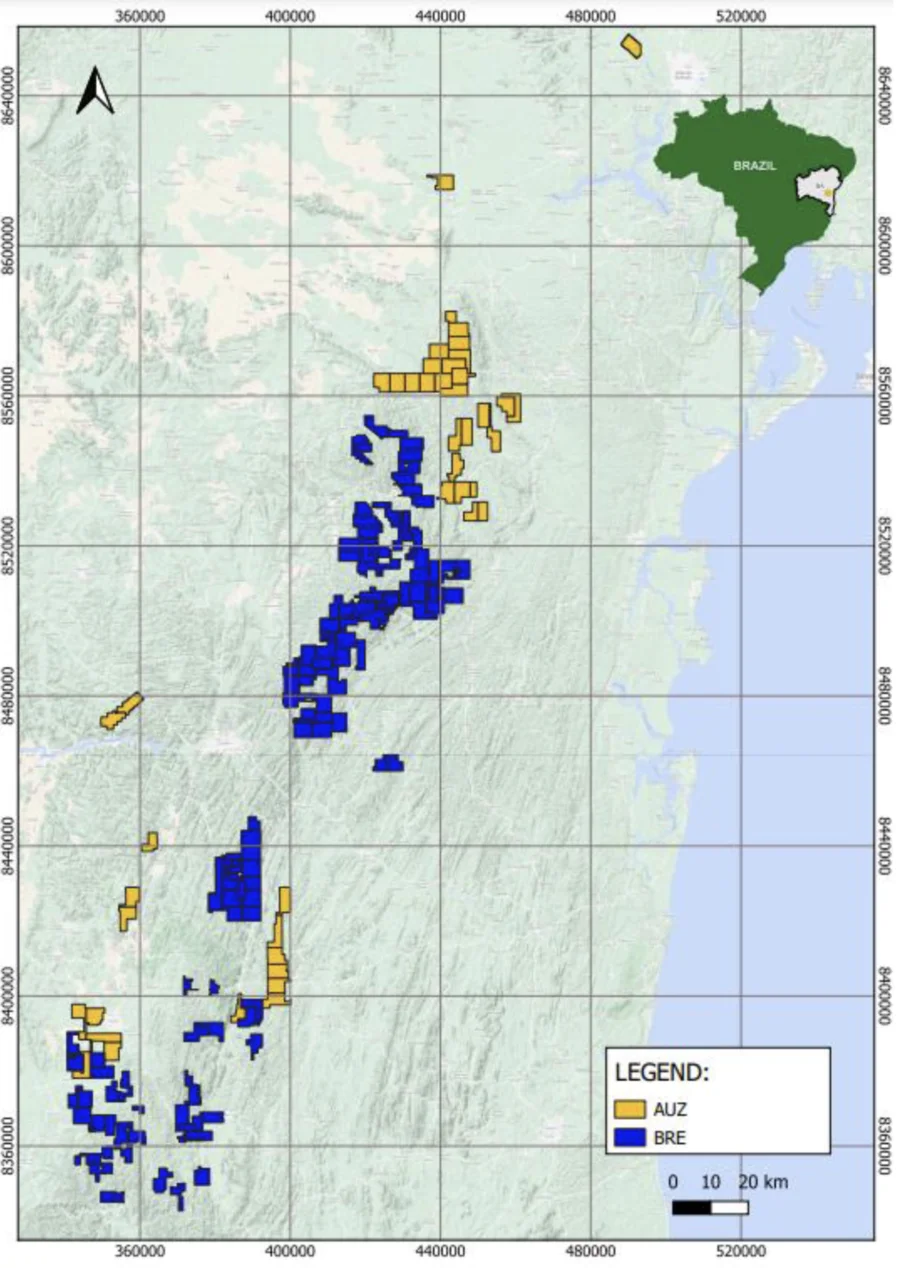
The Jequie Rare Earths Project is located in Bahia State, northeast Brazil, adjacent to the 510 Mt Rocha de Rocha rare earth project partly owned by Brazilian Rare Earths (ASX: BRE). The project covers 45 mineral right claims totalling 82,568 hectares, with an additional 17 new tenements (approximately 51,000 hectares) pegged for strategic expansion.
A 72-hole auger drilling program totalling 500.6 metres has been completed across two priority target areas (Jequie South and Jequie North). At Jequie South, the best intersection returned 15 metres at 1,720 ppm Total Rare Earth Oxide (TREO), including 3 metres at 3,055 ppm TREO. Neodymium and praseodymium (NdPr) are the primary target rare earth elements.
Cerium depletion relative to other rare earth elements at Jequie South is a strong indicator that REE enrichment is related to ionic clay adsorption within the regolith. This deposit type — where rare earth elements are loosely bound to clay particles and can be extracted using dilute acid — is typically lower-cost to process than hard-rock rare earth sources.
Key ASX Announcements
Jequie Rare Earths Project
Bahia State, Northeast Brazil
Located in Bahia State, northeast Brazil, adjacent to Brazilian Rare Earths’ Rocha de Rocha REE project. The project covers 45 mineral right claims totalling 82,568 hectares, with a further 17 expansion tenements (approximately 51,000 hectares) pegged.
Key Project Highlights
82,568 ha
45 mineral right claims plus 51,000 ha expansion tenements
1,720 ppm
TREO over 15 metres from auger drilling at Jequie South
Ionic Clay
Cerium depletion at Jequie South indicates lower-cost processing potential
Adjacent
Next to the 510 Mt Rocha de Rocha REE deposit (BRE)
Project Advantage
| Category | Detail | Description |
|---|---|---|
| Scale | Permit area | 45 mineral right claims (82,568 ha) plus 17 expansion tenements (approximately 51,000 ha) for a total project footprint of approximately 133,568 ha. |
| Results | Auger drilling | Best intercept: 15m @ 1,720 ppm TREO, including 3m @ 3,055 ppm TREO (Jequie South). 69% of Jequie South samples returned TREO >400 ppm. |
| Deposit type | Ionic clay potential | Cerium depletion at Jequie South indicates ionic clay adsorption — rare earth elements loosely bound to clay particles, typically amenable to lower-cost acid leach processing. |
| Neighbours | Strategic location | Adjacent to the 510 Mt Rocha de Rocha REE project owned in part by Brazilian Rare Earths (ASX: BRE), validating the district’s rare earth potential. |
| Targets | Two priority areas | North and South Dario Meira Eluvial targets feature saprolite-clay regolith extending to depths exceeding 20 metres, both open to follow-up drilling. |
| Multi-target | Two enrichment styles | Jequie South (ionic clay adsorption) and Jequie North (monazite/physical concentration) offer complementary REE enrichment pathways within the same project. |
Potential Value Catalysts
-
Follow-up drilling at North and South Dario Meira Eluvial priority targets
-
Metallurgical test work confirming ionic clay processing potential
-
Further geological mapping across the expanded tenement package
-
Grant of the 17 expansion tenements
-
Resource definition across Jequie South and Jequie North
Auger Drilling Results — Jequie South
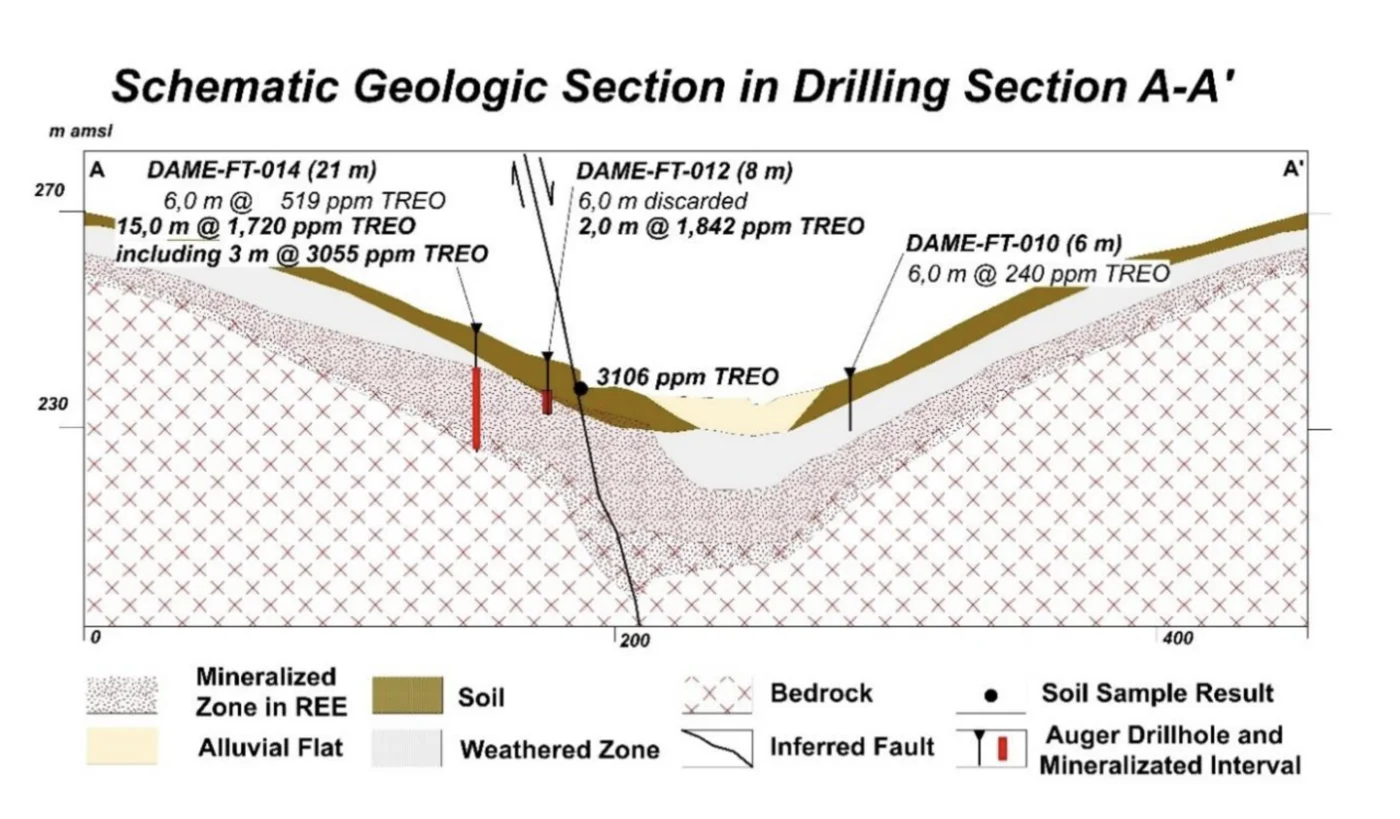
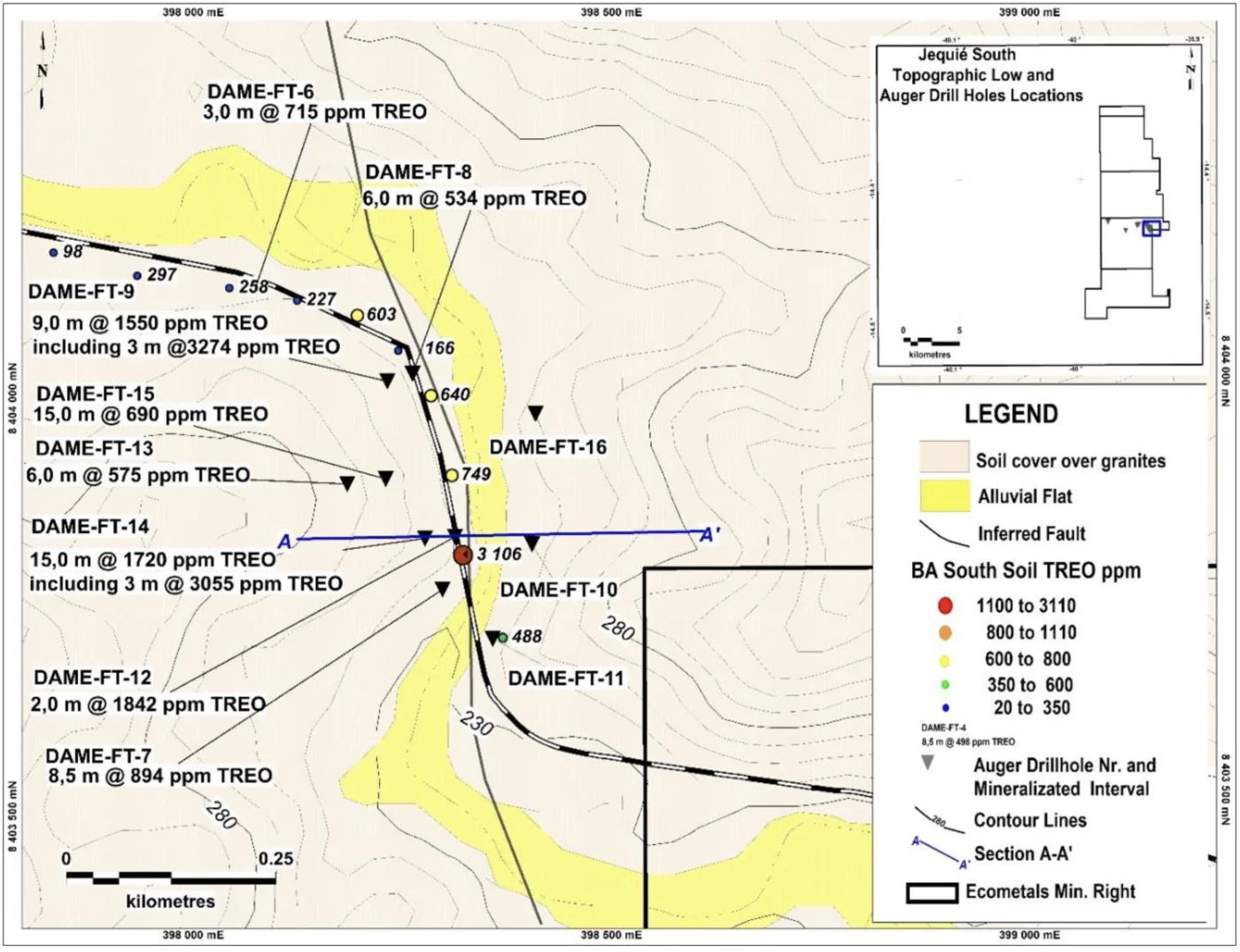
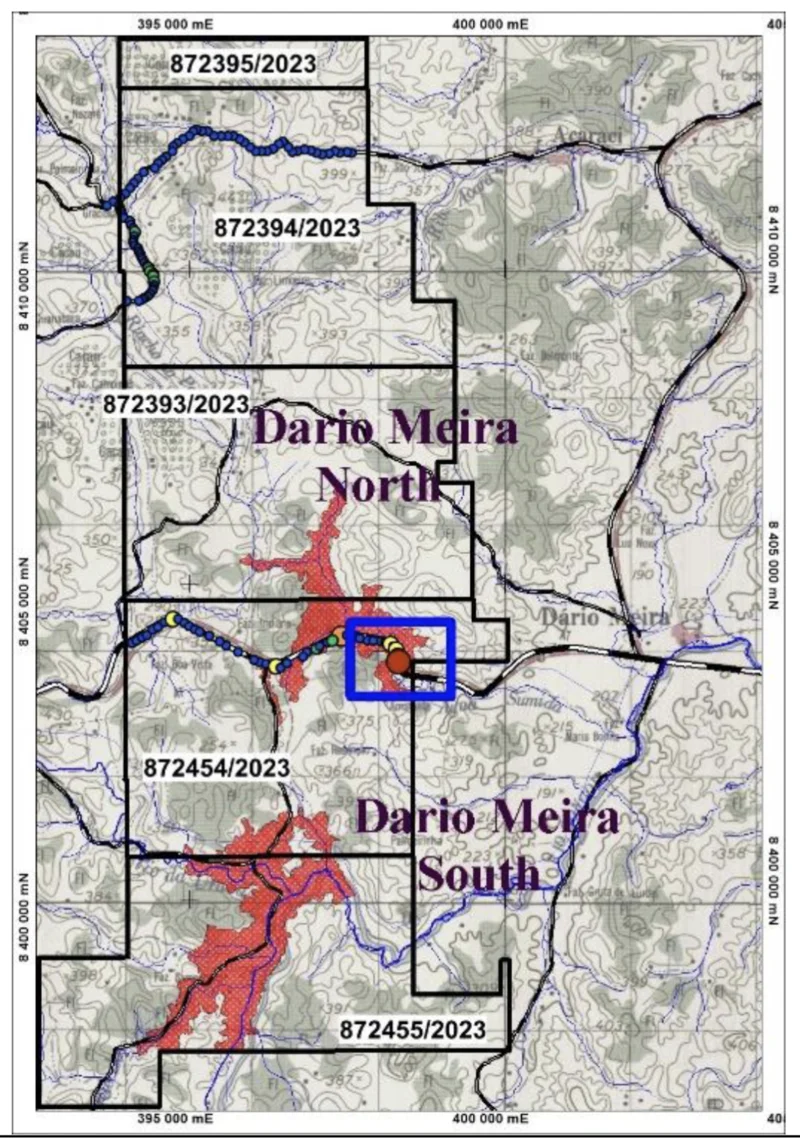
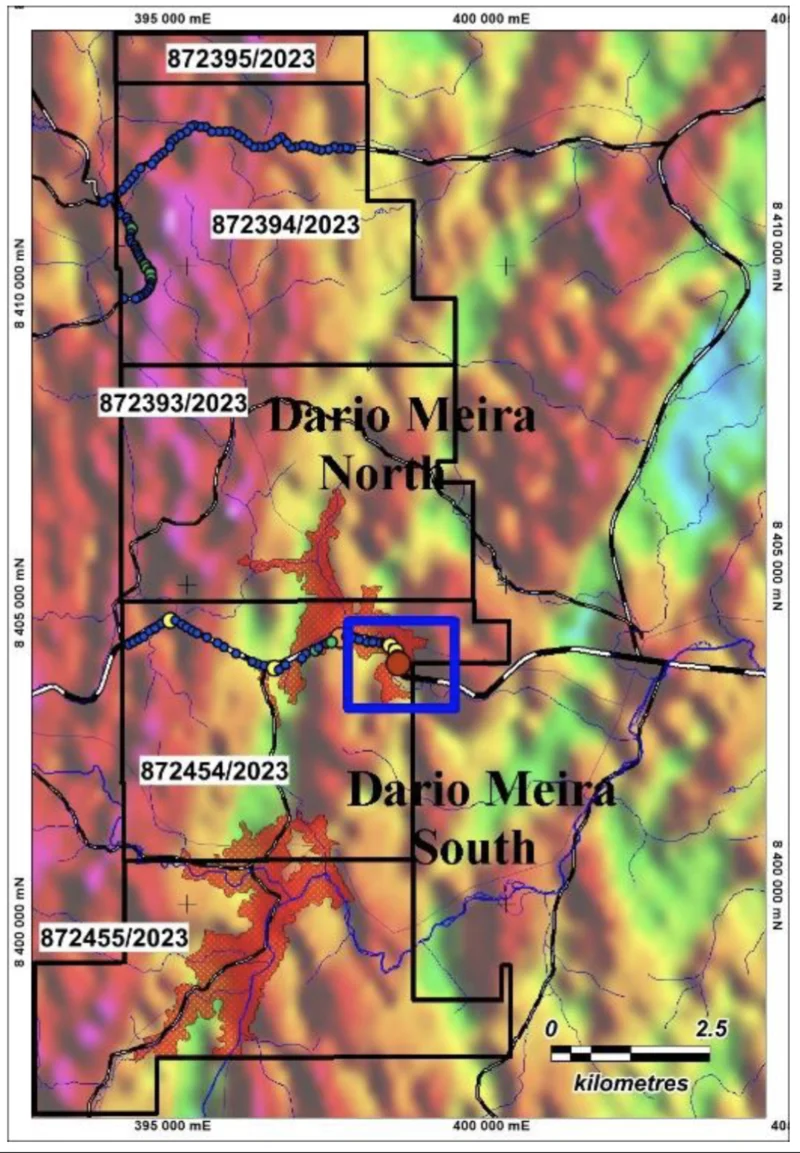
16 auger holes for 157.1 metres. 45 samples collected from 130 metres of drilling. 69% of samples returned TREO assays greater than 400 ppm.
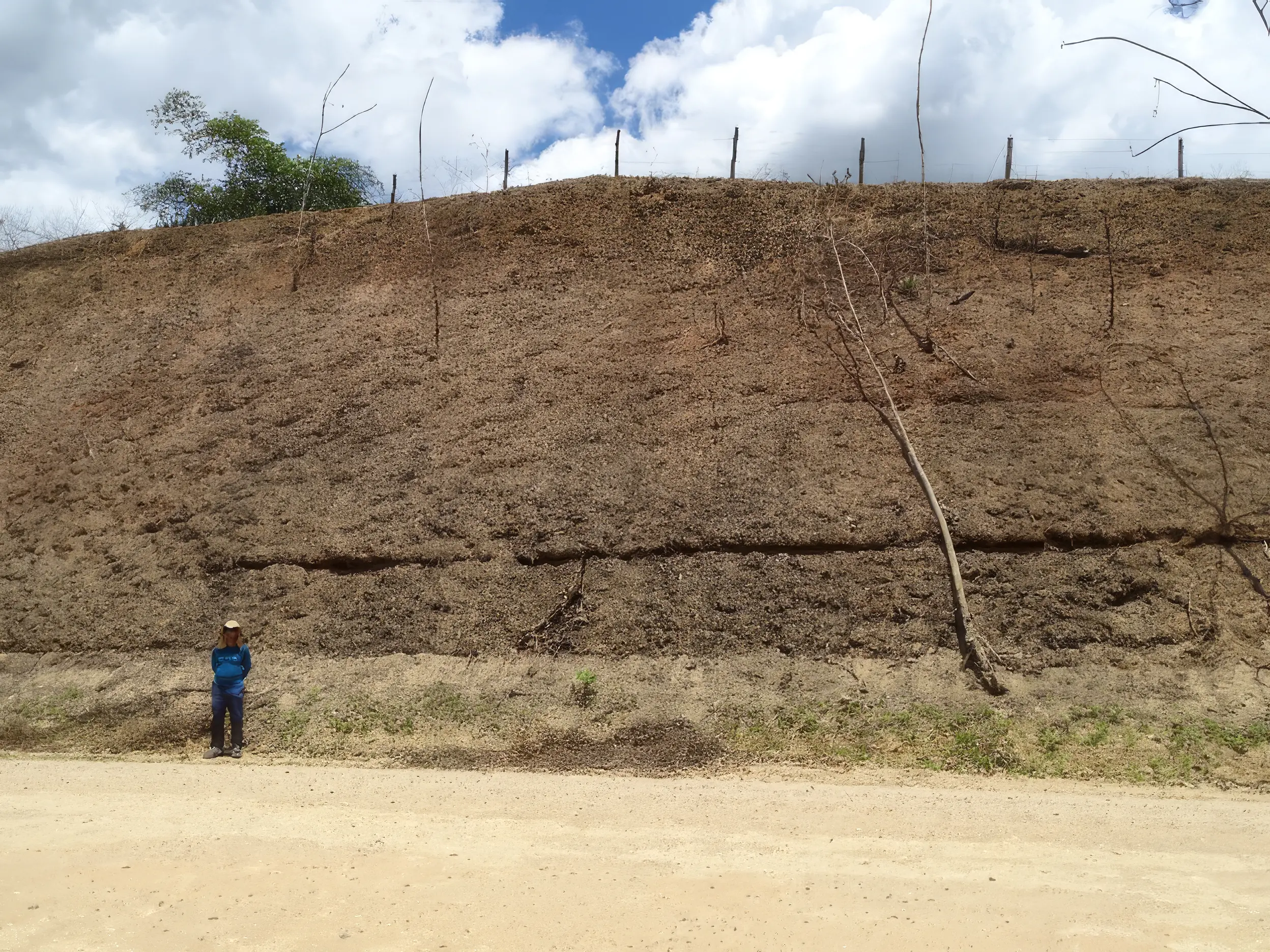
Cerium depletion relative to other rare earth elements is a strong indicator of ionic clay adsorption — a style of REE enrichment where rare earth elements are loosely bound to clay particles and can be extracted using dilute acid, typically at lower cost than hard-rock rare earth sources. Two priority targets have been delineated (North Dario Meira Eluvial and South Dario Meira Eluvial), occurring within broad depressions with saprolite-clay regolith extending to depths exceeding 20 metres below surface.
| DAME-FT-14 | 15.0m @ 1,720 ppm TREO from 6m | incl. 3.0m @ 3,055 ppm TREO |
| DAME-FT-12 | 2.0m @ 1,842 ppm TREO from 6m |
Auger Drilling Results — Jequie North
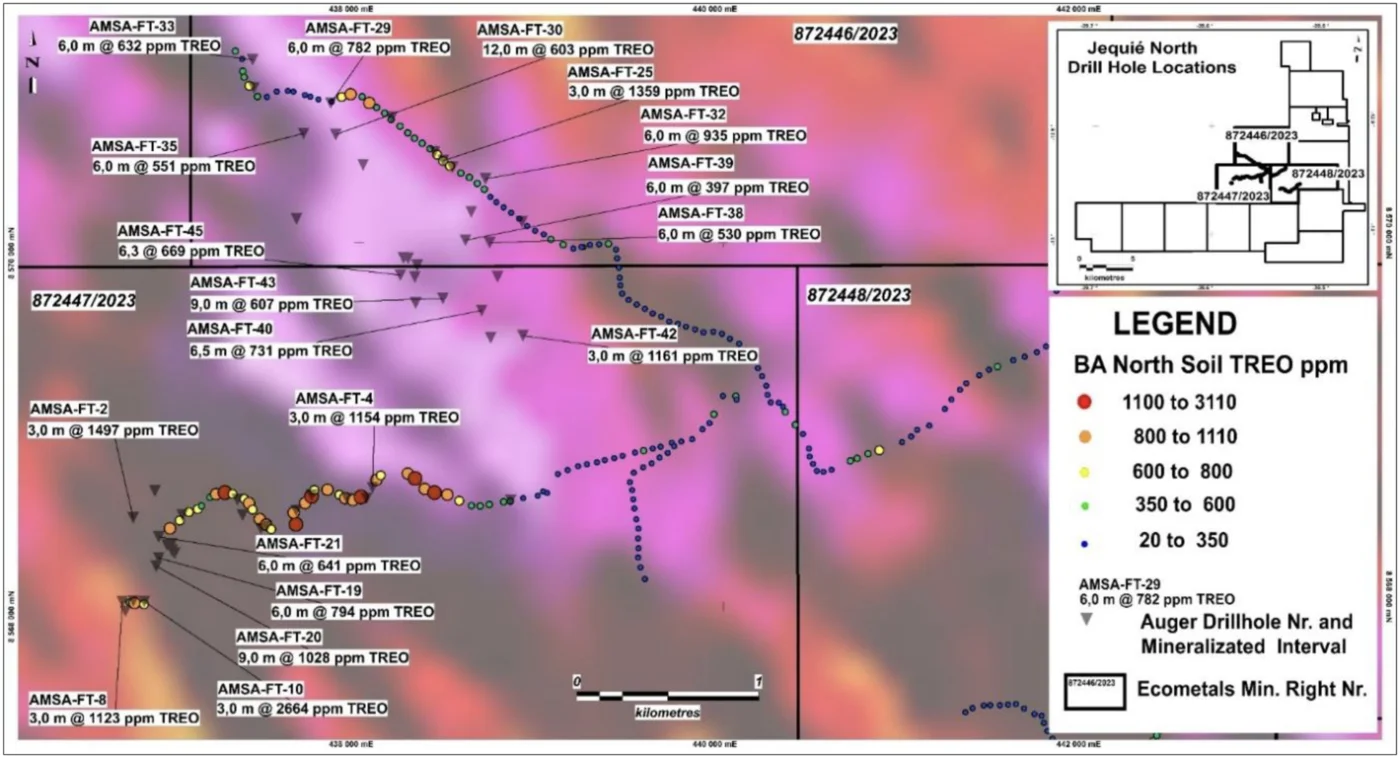
56 auger holes for 343.5 metres. 105 samples collected from 291 metres of drilling. 55% of assays returned TREO values greater than 400 ppm.
The regolith profile at Jequie North appears less well-developed than Jequie South. Initial observations suggest REE enrichment here is from physical concentration of rare earth-rich minerals (such as monazite) derived from underlying thorium-rich leucogranite and charnockite source rocks, rather than ionic clay adsorption.
| AMSA-FT-20 | 9.0m @ 1,028 ppm TREO |